What a ration pack contains
A standard pack is designed to feed one household for approximately one month: wheat flour, rice, pulses, cooking oil, tea and sugar, together with salt and basic spices. It is deliberately plain and filling rather than varied, because its purpose is to lift the daily question of food off the family’s shoulders for a period long enough to let them recover.
How families are selected
Selection takes place in the village, not in an office. We consult the elders and the neighbours, examine the house itself, and establish whether the family owns land, whether anybody in it is earning, how many people depend on that income, and whether there is long-term illness, a widow or an orphan in the household. We would rather spend an additional day on this than hand a pack to a family that does not need it while a family that does looks on.
Emergency food relief
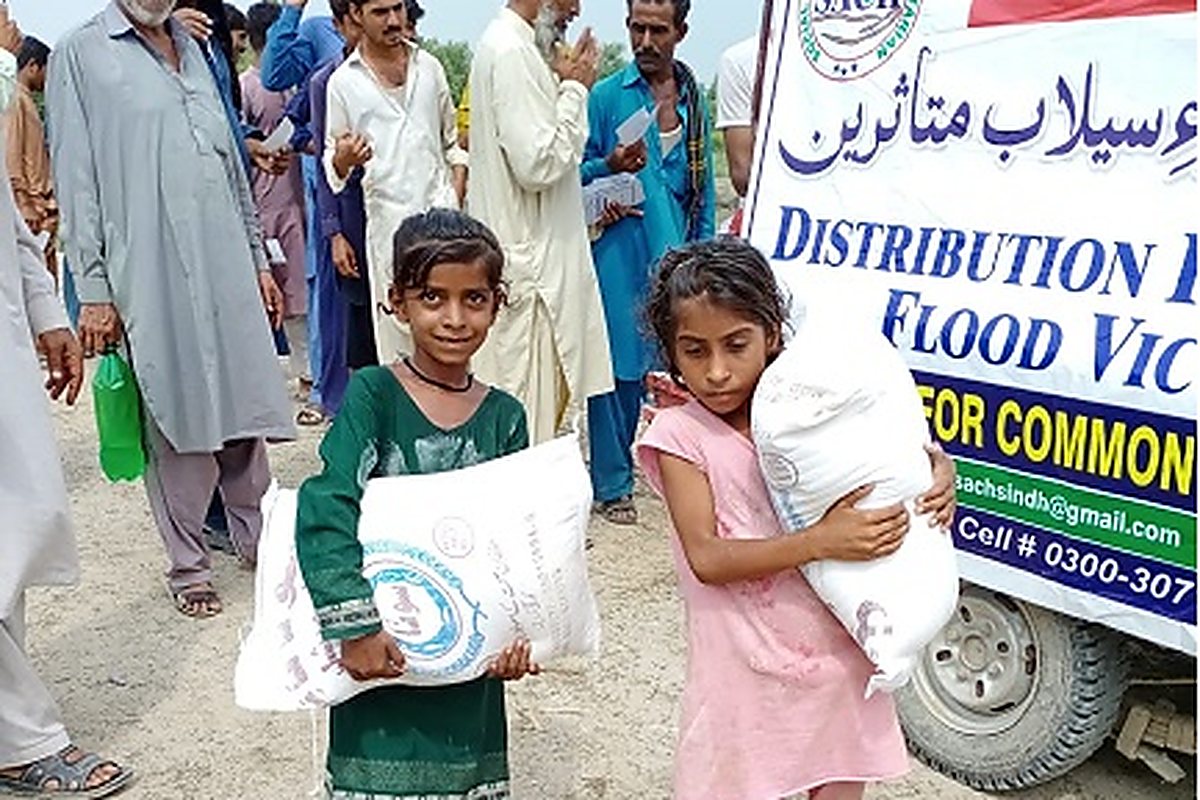
Much of southern Sindh sits at the tail of the irrigation system and close to the sea, and heavy monsoon rainfall has nowhere to drain. The same villages are inundated again and again. When that happens the ration programme becomes an emergency operation: dry food, drinking water where the pumps are submerged or contaminated, and tarpaulin for families sleeping on the embankments. Once the water recedes we help repair and rebuild the houses that collapsed.
Why we are usually there first
We are not an external organisation arriving after the news does. We are based in Sindh and we already know these settlements by name from the water and medical programmes. We know which families have no reserves before anyone has had the opportunity to conduct a survey, and we can reach them while the roads are still difficult.
Zakat. If you would like your contribution treated as zakat, write “zakat” in the reference of your bank transfer or mention it in your email. It is then recorded separately and disbursed only to households that are eligible to receive it.