
Serving underserved communities across Sindh, Pakistan since 2011 contact@sachpk.org
SACH logo SACHSocial Aid for Common Humanitarian

The problem

Across large parts of rural Sindh the shallow groundwater is brackish — drinkable in an emergency, but bitter, and damaging to health over months and years. In the desert villages of Tharparkar and Mithi the water table is deep and often saline; in Sujawal and Badin the land lies at the tail of the irrigation system and close to the sea, and the same problem arrives from the other direction. Households living there have three options: drink it regardless, buy water they cannot afford, or walk.

Most walk. The journey is usually undertaken by the women and older girls of the household, several times a day, carrying pots. It consumes hours that could have been spent in school or in paid work, and during the hot months it costs health as well.

The purpose of the project

A working hand pump within the settlement removes that journey entirely. Water becomes available at any hour, which matters most when somebody in the household is unwell or when there is a young child. It also removes an entire category of illness: a large share of what our doctors treat at the medical camps can be traced back to a poor drinking-water source.

How each pump is built

  1. AssessmentRequests reach us through village elders. We visit and establish how far the nearest working sweet-water source is and how many households would use a new pump.

  2. Boring and testingThe bore is sunk until sweet water is reached, and the water is tasted and checked. If the water at that location is saline at every workable depth, we relocate the site rather than hand over a pump that nobody can drink from.

  3. Platform constructionThe pump is mounted on a raised concrete platform with a sloped basin and an outlet channel, so that waste water drains away instead of standing around the well head, turning the ground to mud and breeding mosquitoes.

  4. Plaque and handoverA plaque is fixed to the platform recording the pump number, the completion date, the village and the name of the donor. The pump is then handed to the households that will use it, with one named person responsible for minor repairs.

  5. Follow-upWe photograph the completed pump, send the images to the donor, and check the pump again on subsequent visits to the area.

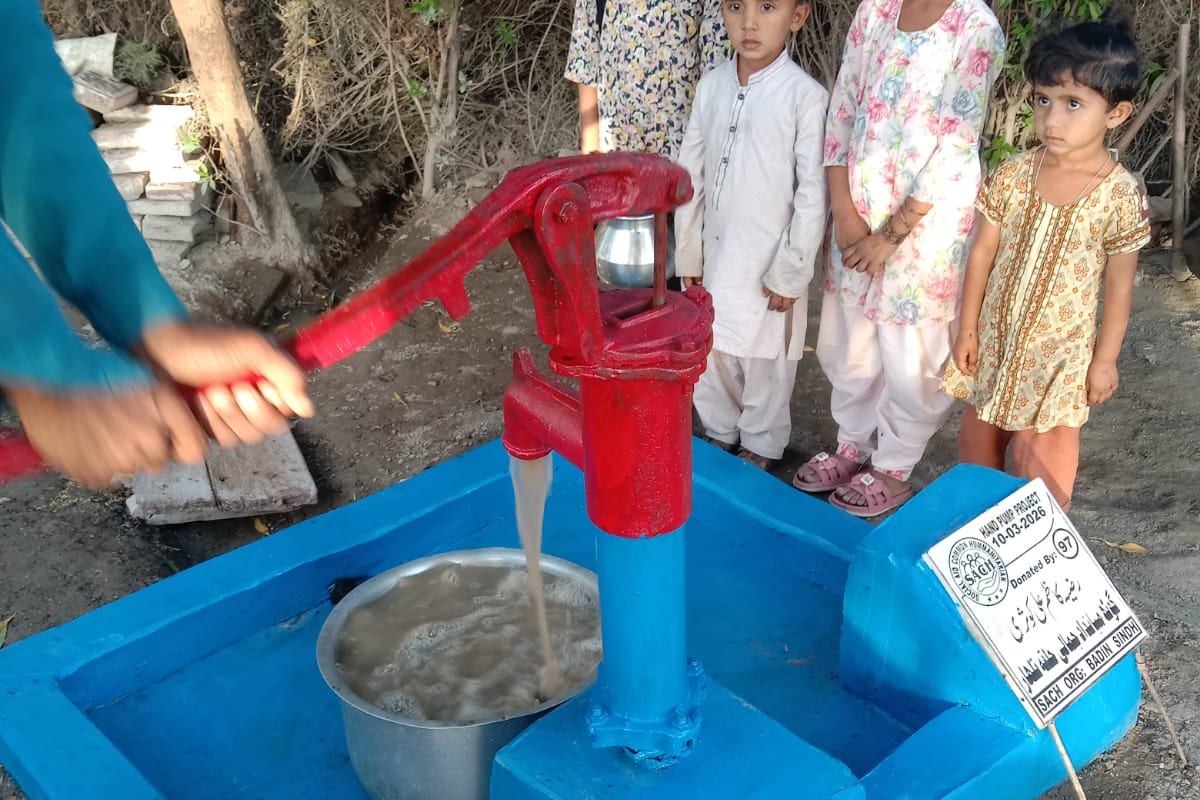
Children waiting at a newly installed hand pump in a rural village in Sindh
Water available in the settlement itself, at any hour of the day.
A hand pump being tested after boring in a rural village in Sindh
Testing the bore before the platform is finished and the plaque is fixed.

Sadaqah jariyah. A hand pump continues to provide water long after the gift is made, which is why most of our water donors fund one in the name of a parent or a relative who has passed away. Send us the name and we have it written on the plaque.

From the Field

Two installations, and what changed

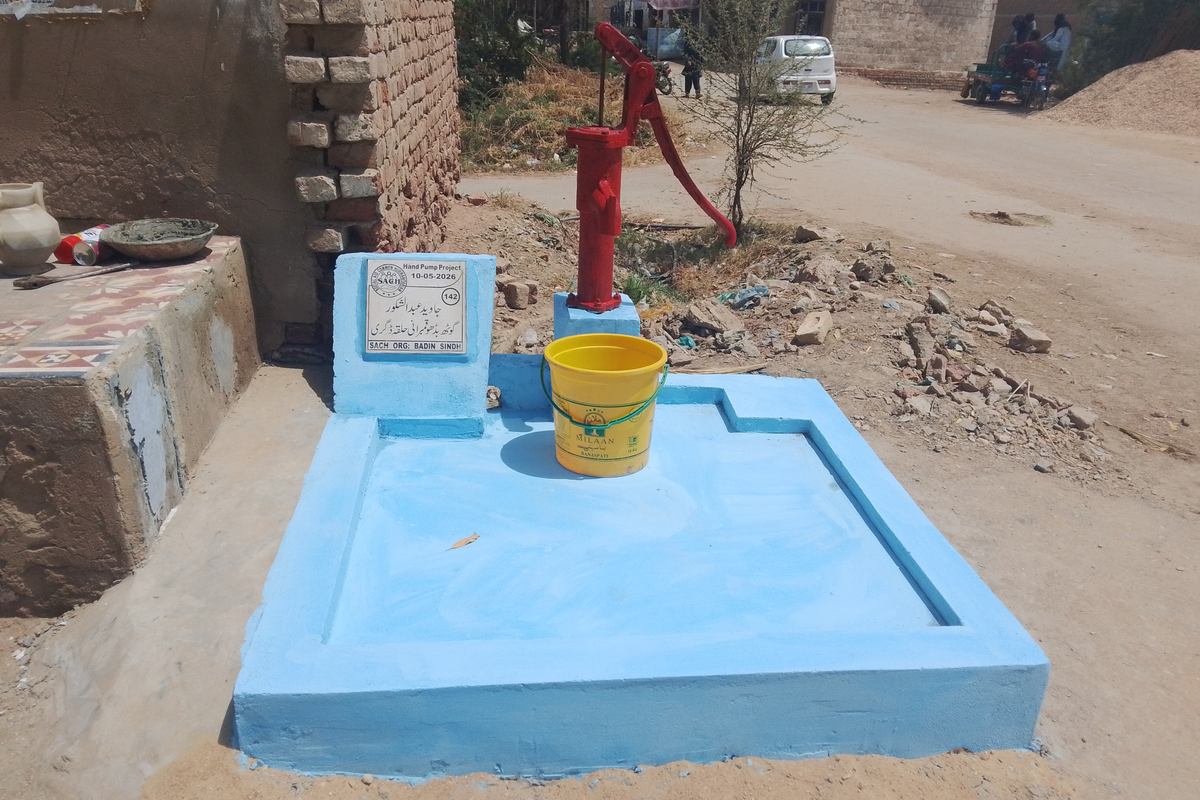
A completed hand pump with its donor plaque in Goth Badho Qambrani

Completed 10 May 2026  ·  Goth Badho Qambrani, Union Council Digri

The walk that used to take the whole morning

Goth Badho Qambrani is a small settlement of mud-brick houses set back from the road, and the water beneath it is saline. For years the households here sent their daughters out before sunrise with pots, and again in the afternoon, to a source far enough away that the round trip consumed most of the morning.

The bore sunk in May reached sweet water. The pump now stands in the middle of the settlement on a sealed platform with a drainage channel leading away from it, and a pot can be filled in under a minute.

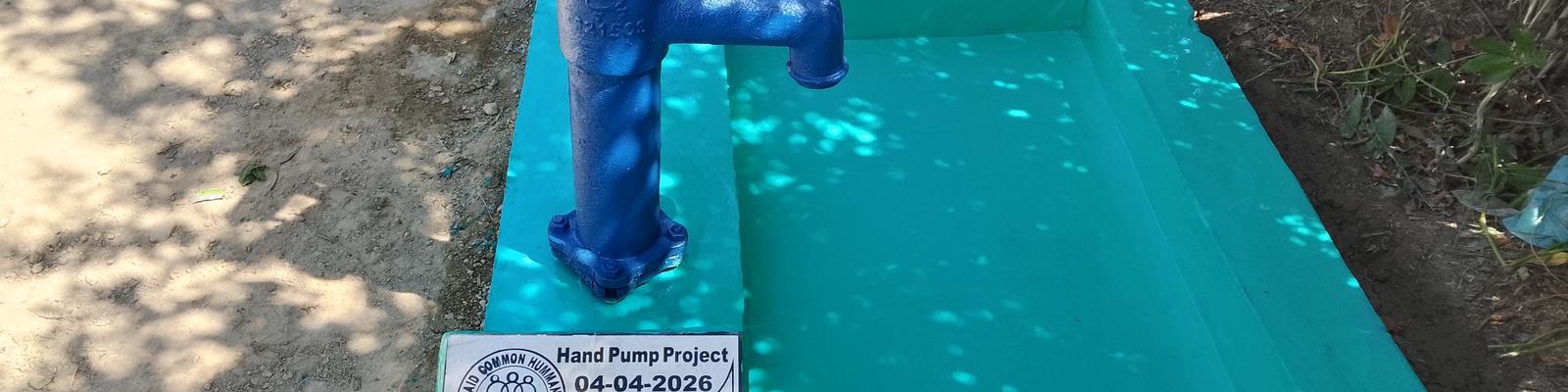
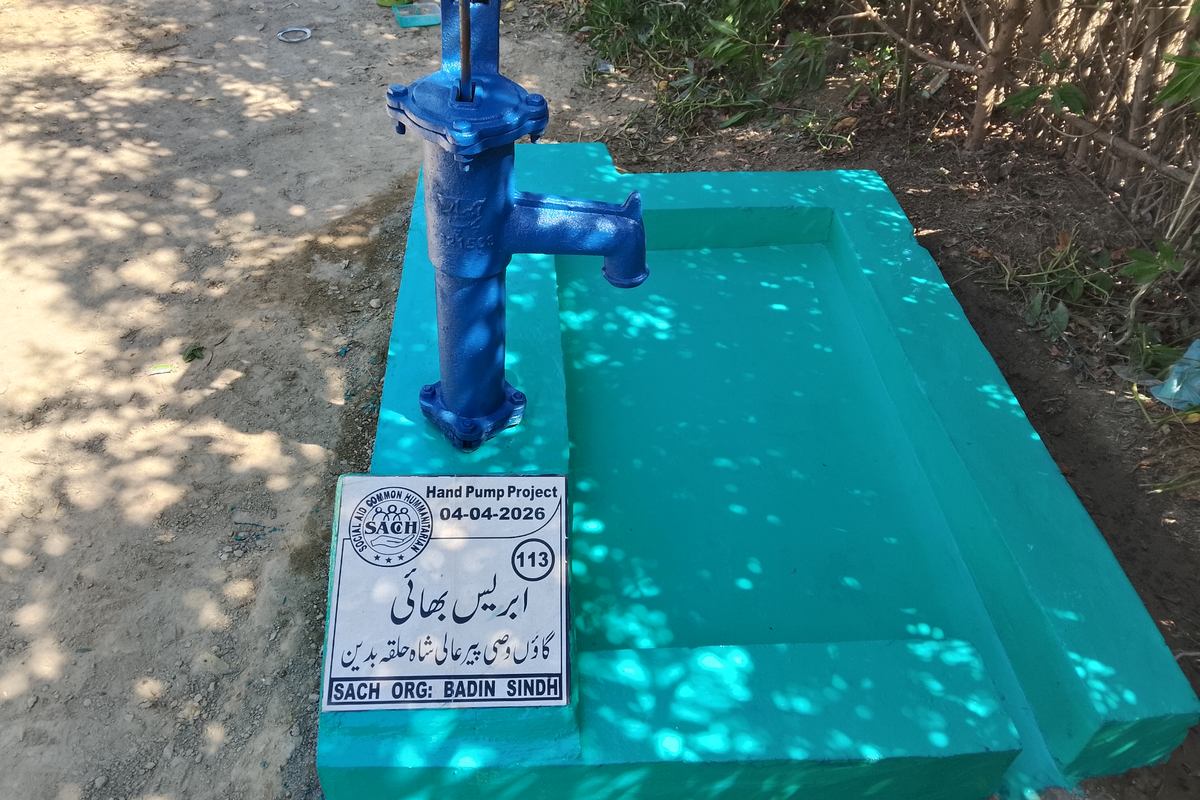
A hand pump serving households in Wasi Peer Ali Shah

Completed 4 April 2026  ·  Wasi Peer Ali Shah, Union Council Badin

A pump on the lane, and an agreement to maintain it

Wasi Peer Ali Shah had a pump once. It broke, nobody took ownership of the problem, and within a season the village was again collecting water from outside. That is the most common way water projects fail in this district — not at installation, but eighteen months later.

This one was therefore handed over differently. It was sited on the lane where the largest number of households can reach it, and before we left, one man from the settlement agreed in front of the others to take responsibility for minor repairs, with our number to call for anything larger. On a later visit it was still running.